CALIFORNIA · RAILROAD HISTORY
Niles Canyon: the history beyond the rearview mirror
A haunted-road setting with a documented place in America’s railroad story.
A canyon is also a corridor
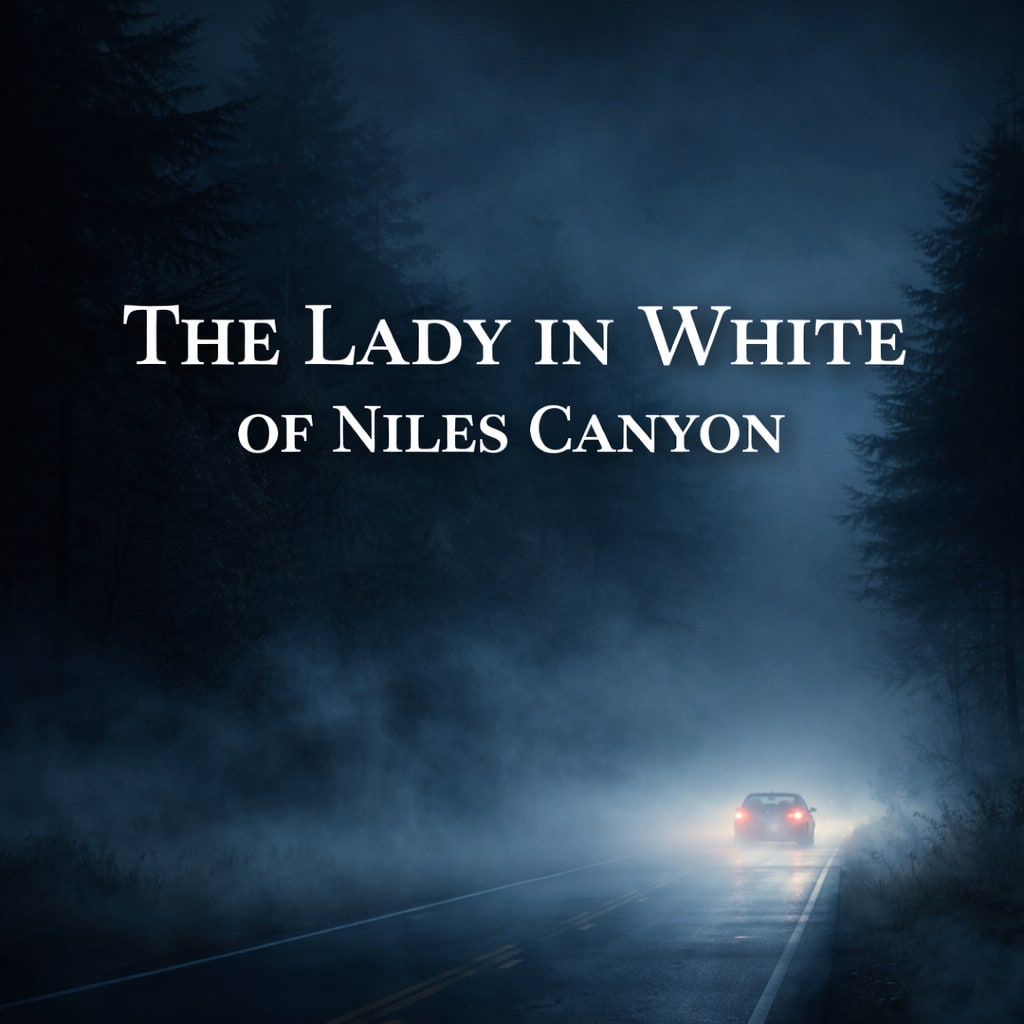
Our episode follows the Lady in White legend. This companion follows a different traveler: the railroad. The same enclosed landscape that makes a nighttime road feel isolated also became a route connecting communities to a much larger world.
The last western connection
The National Park Service describes an eleven-mile historic railroad district between Sunol and Fremont’s Niles area. It records completion of the canyon connection to the San Francisco Bay area in 1870. That date matters: the famous 1869 joining of the transcontinental railroad does not tell every part of the western route’s construction story.
The people behind the engineering
The Park Service documents Chinese laborers grading and building the railway through the canyon. Work reached the area in 1866, paused amid contractor and financing disagreements, then resumed in late 1869. Workers built the infrastructure that made the route possible, including retaining walls, culverts and bridge piers. Remembering them changes the way we look at the landscape: the canyon contains human labor as well as scenery.
A living piece of the past
The Pacific Locomotive Association operates Niles Canyon Railway as a living history museum. That is a useful counterpoint to the vanishing-hitchhiker story. One tradition asks what might appear and disappear along the road; the other preserves equipment, skills and a route that can still be experienced.
Where the legend belongs
A white dress in a ghost story is not an identified historical person. The bride, accident and disappearance versions should remain folklore unless a specific record establishes a connection. We can appreciate the story without attaching it to an invented victim. On your next mental trip through the canyon, leave room for both the roadside tale and the workers whose presence is documented.
Follow the paper trail.
Historical records and folklore are identified separately. Sources consulted October 2026.