MONTANA · FRONTIER HISTORY
Hell Gate: the trading post before Missoula
A vanished settlement explained through roads, trade and waterpower.
A name can overshadow a place
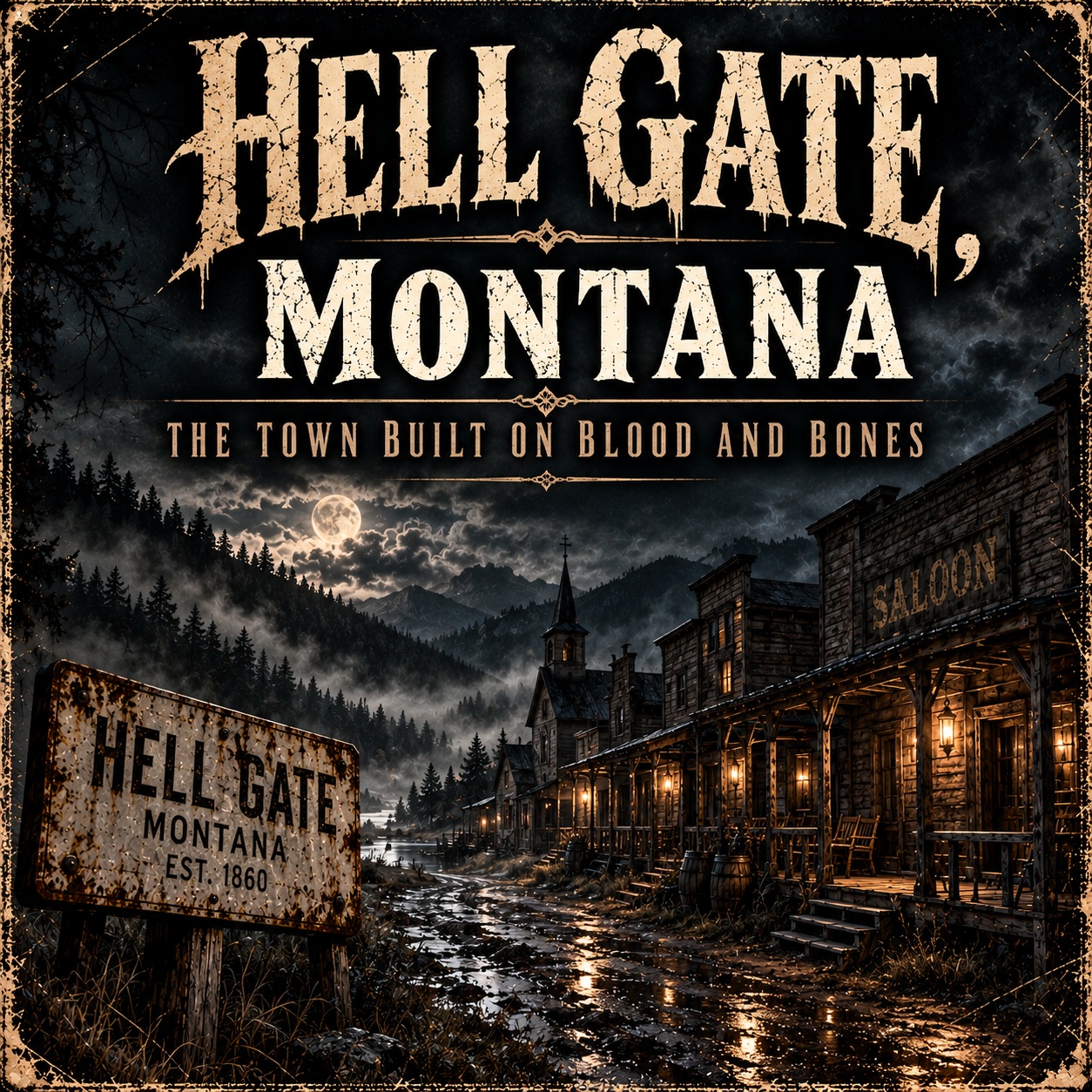
Hell Gate sounds like the beginning of a horror story. But a name does not explain how a settlement grew or why its center shifted. Behind our episode’s frontier atmosphere is a more tangible story about supplies, transport and the power needed to run a mill.
The store at the road
The Historical Museum at Fort Missoula records Higgins, Worden and Woody arriving in the valley in 1860 with goods for a trading post. Their business began in a canvas tent and became a stop along the Mullan Road. A blacksmith, lodging, a livery stable and saloons followed. The town’s position in a travel network helped turn a store into a settlement.
Why the center moved
The museum identifies access to waterpower for milling as a key reason for looking elsewhere. Construction at Missoula Mills began in 1864, about four miles east of Hellgate Village. The mill was completed in 1865, and Higgins and Worden relocated their store. This is a documented explanation for the shift: the economic center moved toward infrastructure that could support growth.
What a disappearance looks like on paper
A town can lose importance without being erased by a single catastrophe. Stores relocate, work follows equipment, and a familiar stop becomes a former stop. Reading this change through business records gives us something the ghost-town image often leaves out: continuity. The people and commerce did not simply evaporate; their activity helped shape the next settlement.
Leave room for the longer history
The trading-post chapter is not the beginning of human history in the valley. Nor do accounts of frontier hardship verify present-day apparitions. This companion focuses on the museum’s documented settlement history; the episode carries the darker storytelling atmosphere. Together they offer a place with both a mood and a material past.
Follow the paper trail.
- Historical Museum at Fort Missoula: early history ↗
- University of Montana: Yellowstone and Hellgate names ↗
Historical records and folklore are identified separately. Sources consulted October 2026.