
MONTANA · MINING HISTORY
Garnet: what a gold rush leaves behind
Beyond the empty windows: the ordinary community inside a mining boom.
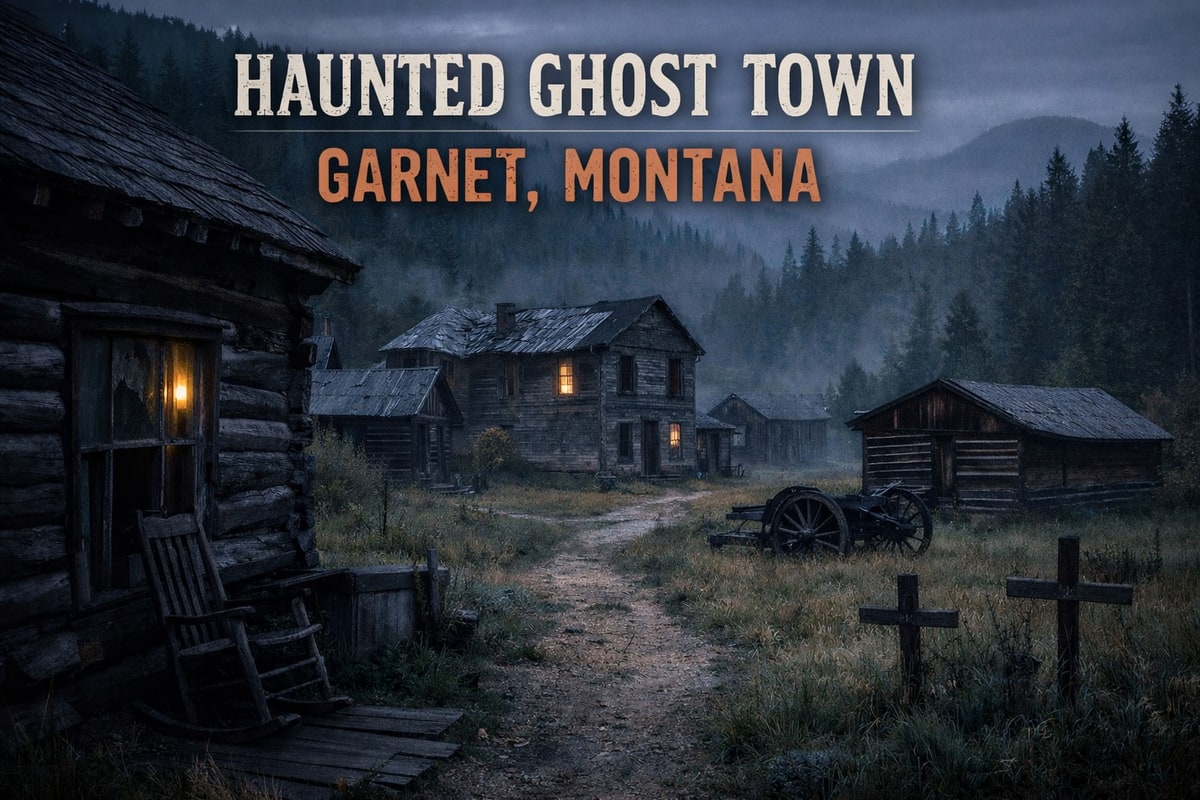
Before the silence
Picture the buildings with their doors open and their rooms occupied. A ghost town was once somebody’s busy afternoon. At Garnet, the mine was only part of the story. Shops, a school and lodging made a community around the promise beneath the ground.
A settlement built around a mill
The Garnet Preservation Association dates a stamp mill at First Chance Gulch to 1895. The settlement was first called Mitchell, then Garnet in 1897. By January 1898, its population approached 1,000. The association records thirteen saloons and a school with 41 pupils. These details complicate the familiar image of an all-male frontier camp: families and daily routines belonged here too.
Leaving happened in stages
Garnet’s decline was not a single night of abandonment. Harder-to-extract gold weakened the town; by 1905 about 150 residents remained. A 1912 business-district fire damaged it further. Mining revived in the 1930s before World War II drew workers away again. What looks like a sudden disappearance to a visitor was a series of economic decisions to the people living through it.
What empty rooms can tell us
Later souvenir hunters removed building materials and fittings. Preservation protects more than a picturesque silhouette: it keeps evidence of how people lived. Look at a doorway and ask who carried groceries through it, who waited for a miner to come home, who decided the next winter would be spent somewhere else. Those questions give the quiet its weight.
History beside the legend
Ghost stories can be part of Garnet’s atmosphere without serving as proof of supernatural events. The documented changes in population, mining and preservation are compelling on their own. Listen to the episode for the mood; return to these records for the lives beneath it.
Follow the paper trail.
Historical records and folklore are identified separately. Sources consulted October 2026.